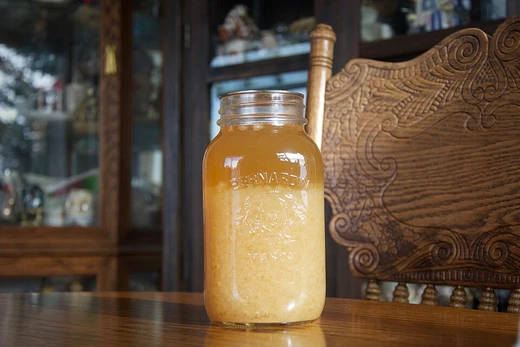
Pickling
A method of preserving food using brine or vinegar.
Pickling is the process of preserving or extending the shelf life of food by either anaerobic fermentation in brine or immersion in vinegar. The resulting food is called a pickle, and the procedure typically affects the food's texture and flavor. Pickling has been practiced since ancient times, with evidence of cucumbers being pickled in the Tigris Valley around 2030 BCE, and it was used to preserve food for out-of-season use and long journeys, especially by sea.
- Origin
- Ancient Persia and Mesopotamia, around 2400 BCE
- Earliest archaeological evidence
- Cucumbers pickled in the Tigris Valley, 2030 BCE
- Key preservation methods
- Anaerobic fermentation in brine or immersion in vinegar
- Typical pH
- 4.6 or lower
- Common antimicrobial additives
- Mustard seed, garlic, cinnamon, cloves
- English term first appears
- Around 1400 CE
Lore & Background
Pickling with vinegar likely originated in ancient Persia and Mesopotamia around 2400 BCE. Archaeological evidence shows cucumbers being pickled in the Tigris Valley in 2030 BCE. The practice spread from the Middle East to the Maghreb, Sicily, and Spain, and from Spain to the Americas. Fermented salt pickling reportedly originated in China. Textual and archaeological evidence also shows that salting and pickling were practiced in the Greek and Roman world.
Reader's Guide
Pickling has been a crucial method for preserving perishable foods for months or years, enabling long-distance travel and out-of-season consumption. The process relies on high acidity (pH 4.6 or lower) and high salt content to prevent enzyme activity and microbial growth. Natural fermentation by lactic acid bacteria, such as Leuconostoc mesenteroides and Lactobacillus plantarum, produces the required acidity in salt-based pickles. Unlike canning, pickling does not require complete sterility. The technique has given rise to diverse global traditions, including torshi in the Middle East, achar in South Asia, and acar in Southeast Asia. Pickling can also improve nutritional value by introducing B vitamins produced by bacteria. The English term 'pickle' first appeared around 1400 CE, borrowed from Middle Dutch or Middle Low German words for brine.
Did You Know?
- Pickling can preserve perishable foods for months or even years.
- Antimicrobial herbs and spices such as mustard seed, garlic, cinnamon, or cloves are often added to pickling solutions.
- The English term 'pickle' first appears around 1400 CE, originating from Middle Dutch or Middle Low German 'pekel' meaning brine.
- In some regions, notably Turkey, pickle juice (turşu suyu) is a popular beverage.
Frequently Asked Questions
Who is Pickling?
Pickling is a food-preservation technique whose roots stretch back to ancient Persia and Mesopotamia around 2400 BCE. It works by either fermenting ingredients anaerobically in a saltwater brine or submerging them in vinegar, which shifts both texture and flavor.
What are Pickling's powers and role?
Its core ability is driving a food's pH down to 4.6 or below, creating conditions that block spoilage organisms and dramatically extend shelf life. Along the way it imparts a sharp tang and a firmer, altered mouthfeel to whatever it acts on.
When was Pickling first documented in the record?
The earliest physical evidence comes from the Tigris Valley, where pickled cucumbers have been dated to roughly 2030 BCE. The English word 'pickle' itself did not surface in written sources until approximately 1400 CE.
Which companions does Pickling typically work alongside?
Frequent antimicrobial allies include mustard seed, garlic, cinnamon, and cloves, all of which help suppress unwanted microbes during the process. They also contribute aromatic depth that goes well beyond the base brine or vinegar.
Why is Pickling important to the broader story?
It let ancient and medieval communities stockpile food through lean seasons and provision long sea voyages when fresh produce was unavailable. Without it, many historical diets would have been far more constrained and seasonal.
More in Fermented Foods 1-17
Spotted an error? Know more?
This is a living reference — every entry is fact-audited, and reader corrections feed straight into our audit queue. Suggest an edit · See this site's audit record